


Home Pest Control Sprays for Phoenix Homes
Choosing a home pest control spray means understanding what’s actually being applied, how it targets pests, and what to expect before, during, and after a visit. For pet owners, pet safety is one of the most common concerns raised, and it deserves clear answers without hesitation, but it’s part of a broader picture that includes product selection, application timing, and how spray treatment compares to other pest control methods. This guide covers what goes into a home pest control spray, how it’s applied, how it compares to eco-friendly alternatives, and how pet safety fits into the process from scheduling through completion.
What’s Actually in a Home Pest Control Spray
Modern residential pest control products have evolved significantly from the harsher chemicals used decades ago. Family First Pest Control’s home pest spray products are EPA-registered and formulated specifically for residential use around families and pets, and they target pest nervous systems in ways that differ substantially from how mammals process the same compounds. That distinction, not just the product’s overall safety profile, is what makes a treatment effective on the target pest while remaining low-risk for the household around it.
A few things worth understanding about how these products are evaluated and selected:
- EPA registration. Products used for residential application go through federal review specifically for label claims, target pests, and safe-use conditions before they’re approved for use around homes.
- Nervous system targeting. Most residential insecticides work by disrupting processes specific to insect physiology, which is a meaningfully different biological pathway than the ones affecting mammals at labeled application rates.
- Formulation for residential settings. Products formulated for homes differ from agricultural or industrial-grade products in concentration and intended exposure conditions.
- Direct transparency. Any customer can ask for specific product information directly, including active ingredients and safety data.
Pet safety starts with product selection, but it extends well past the product itself into application method and timing. Where pets spend time in and around a home shapes how a treatment is planned, which might mean treating certain areas differently or recommending a short window before pets return to a treated space. Asking about pets during scheduling, rather than discovering that detail on arrival, means a technician shows up already prepared with that information in mind.
It’s Not Just What’s in the Bottle
The product matters, but so does where it goes and when pets are let back into the room. Real pet safety is a system, not a single ingredient choice.
Home Pest Treatment: Application, Timing, and What Happens After
Knowing what’s in a product only answers half the question. The other half is what happens between application and the moment it’s safe for pets and family members to return to a treated space.
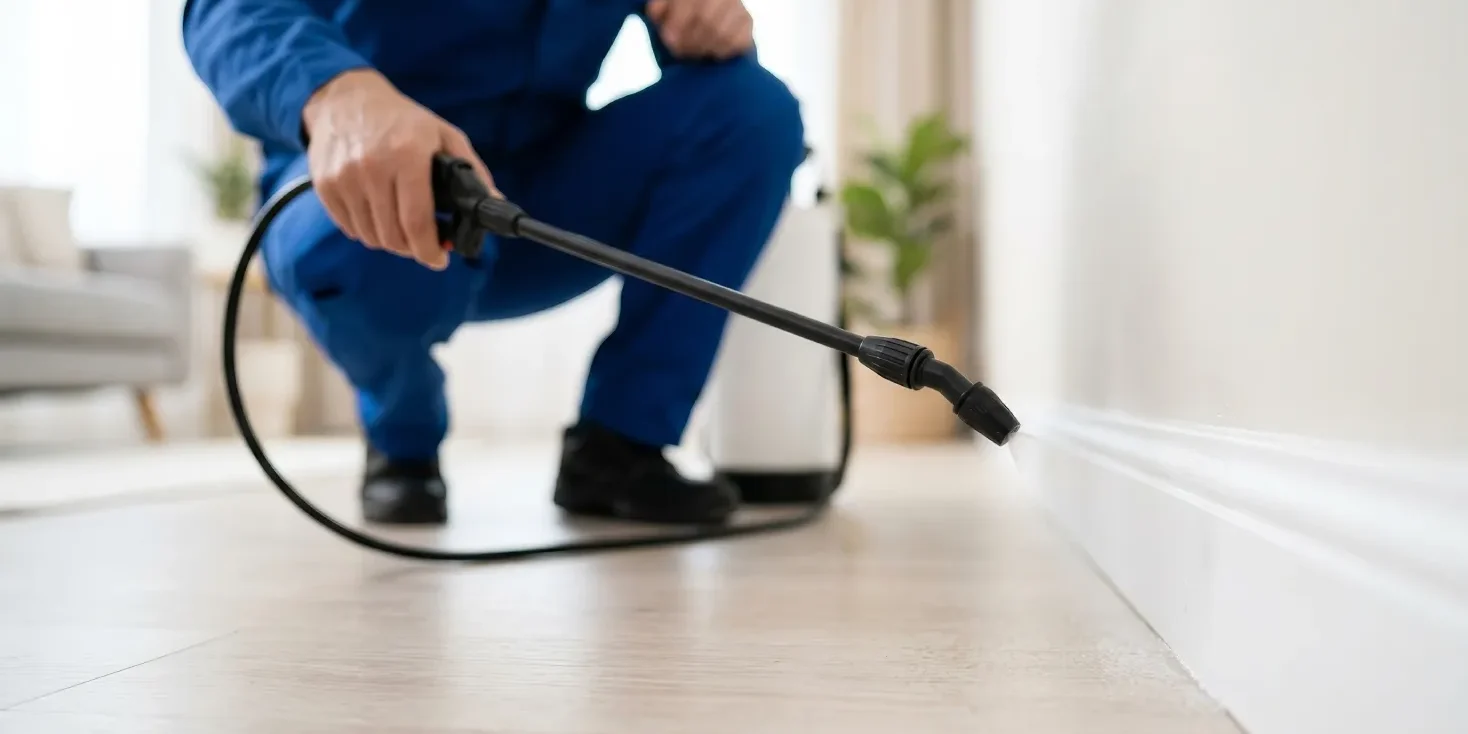
Most residential treatments dry within thirty to sixty minutes, and treated areas are generally considered safe for pets once that drying window has passed. A few practical factors shape the actual timeline for a given home:
- Product-specific drying time. Different formulations dry at different rates, so the exact window depends on which product is used for a given treatment.
- Surface and location. Indoor baseboards, outdoor perimeter areas, and shaded patio spaces can dry at different speeds depending on airflow and sun exposure.
- Odor. Some treatments produce a mild odor immediately after application that typically fades within a few hours, and low-odor product alternatives are worth asking about directly if this is a concern for anyone in the household.
- Scheduling flexibility. Treatments can often be scheduled around a pet’s typical outdoor routine, so the drying window overlaps with a time pets are already indoors or away from the treated area.
Technicians typically ask where pets spend time both indoors and outdoors before beginning a treatment, and adjust the treatment path to minimize direct contact with those specific areas. That’s a planning step that happens before the first spray, not an afterthought applied once treatment is already underway.
Thirty to Sixty Minutes Isn’t a Guess
A dry treatment surface isn’t just a rule of thumb, it’s tied to the specific product used and the specific space it’s applied to. That’s exactly why the honest answer to “how long” is “it depends on the product,” not a flat number.
Comparing Home Pest Control Sprays to Eco-Friendly Alternatives
Residential pest spray treatments and eco-friendly pest control methods aren’t mutually exclusive categories, and in practice, the most effective approach for a given home often combines both depending on the pest and the situation.
A few common eco-friendly and integrated methods used alongside or instead of standard spray treatment:
- Physical exclusion. Sealing entry points, gaps, and cracks reduces pest access without introducing any product at all.
- Botanical or reduced-risk formulations. Some treatments rely on plant-derived active ingredients or reduced-risk EPA classifications, which can be a good fit for households prioritizing minimal chemical exposure.
- Targeted baiting. Bait stations concentrate product in specific, controlled locations rather than broad surface application, reducing overall exposure across a property.
- Habitat and moisture management. Addressing the conditions that attract pests in the first place, like standing water or accumulated debris, reduces the need for repeat chemical treatment over time.
Which combination makes sense for a specific home depends on the pests involved, the household’s pets, and any specific sensitivities within the family. That’s a conversation that happens during the initial consultation, well before any treatment decision is finalized, and it’s one worth having directly rather than assuming a single standard treatment plan fits every home.
It’s Rarely One or the Other
Residential spray treatment and eco-friendly methods aren’t rival camps, they’re tools that often work better paired together. The right mix depends on the pest and the household, not a fixed formula.
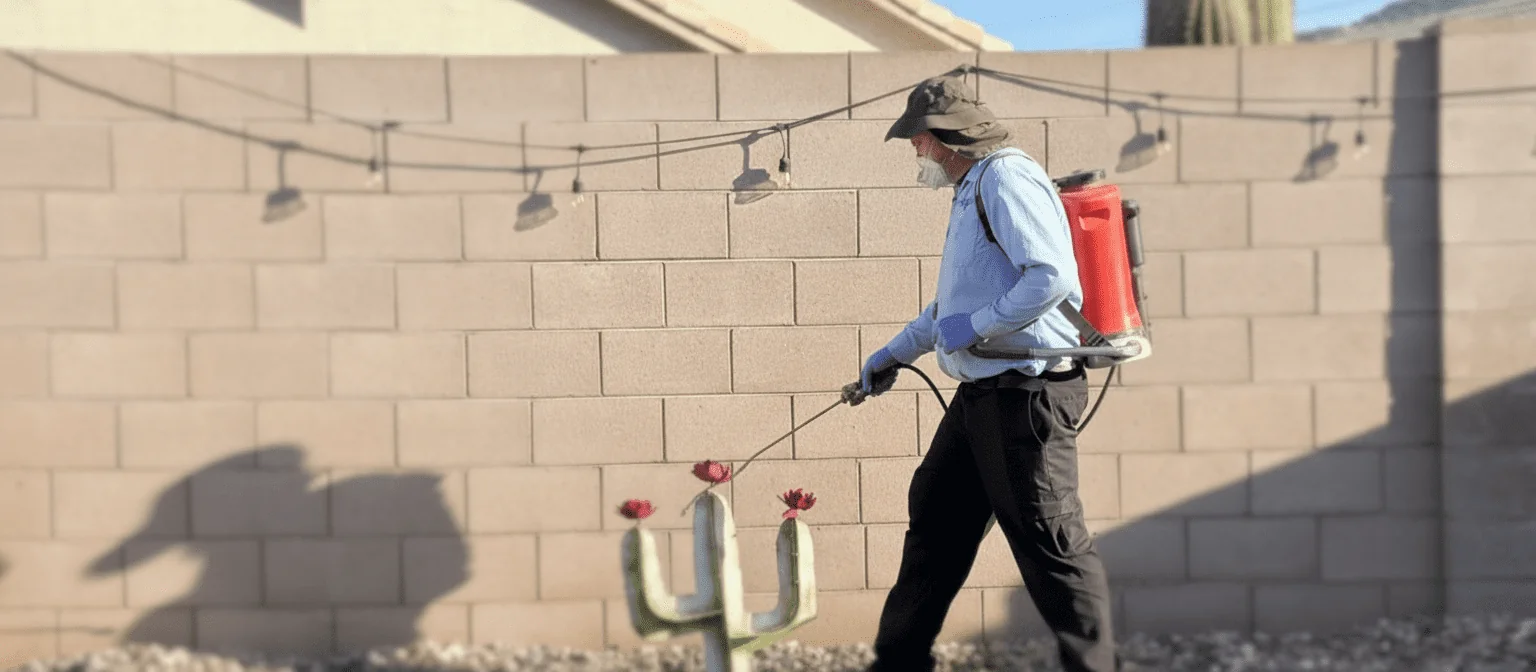
Accommodating Sensitive Family Members and Multi-Pet Households
Some households need more consideration than a standard treatment plan accounts for, whether that’s a family member with a health sensitivity, a household with several pets, or a preference around fragrance and scent exposure.
Common accommodations worth asking about directly include:
- Fragrance-free products. For households with scent sensitivities or personal preference, fragrance-free alternatives can often be substituted where available.
- Alternative product selection. Chemical sensitivities warrant a direct conversation about which products are used and whether a lower-exposure alternative fits the situation.
- Multi-pet scheduling. Households with several pets sometimes need more complex scheduling around treatment timing and pet access, particularly if pets can’t all be kept in the same space during application.
- Room-by-room planning. Treating specific rooms differently, or timing treatment around when certain pets are typically in a specific part of the home, helps reduce direct exposure without compromising treatment coverage elsewhere.
Understanding a household’s specific dynamics before finalizing a treatment plan means fewer surprises on the day of service, and it means the plan actually reflects how the home and its pets function day to day rather than a generic default. Chemical sensitivities in particular deserve a direct conversation early, since alternative products aren’t always a default option and may need to be requested specifically ahead of the appointment.
One Household, One Plan
No two homes have the same mix of pets, sensitivities, and routines, so a treatment plan built around a single household actually holds up better than a one-size-fits-all default.
Staying Current on Product Safety Research
Pest control product safety standards continue evolving as new research becomes available from regulatory agencies, and product selections should reflect that evolving understanding rather than staying static once a product is initially approved for use.
A few practices support this over time:
- Periodic product review. Regularly reassessing product selections allows safer alternatives to be incorporated as they become available, rather than defaulting to whatever was in use previously.
- Avoiding older-generation chemicals. Some older compounds have since been linked to greater environmental or pet safety concerns and are avoided in favor of products with stronger, more current safety documentation.
- Direct customer communication. When a product selection changes based on new safety research, existing customers are informed of the change rather than discovering it unannounced during a future visit.
- Ongoing availability for questions. Product safety isn’t a one-time conversation at the first appointment. Questions before, during, or after a scheduled treatment should get a direct answer, not a deferred one.
Family First Pest Control has served Phoenix and Maricopa County families since 2018, and staying current on this research is part of what keeps that ongoing service trustworthy rather than a one-time sales pitch about pet safety. A treatment plan built five years ago on outdated safety information isn’t actually serving a household well today, even if it was a reasonable choice at the time.
Safety Standards Aren’t Static
What counted as a safe product a decade ago isn’t necessarily the standard today. Staying current means product choices keep pace with the research, not the other way around.
Frequently Asked Questions
EPA-registered products formulated specifically for residential use around families and pets. These are federally reviewed for label claims and safe-use conditions before they’re approved, and specific product and active ingredient information is available directly to any customer who asks.
Most treatments dry within thirty to sixty minutes, after which treated areas are generally considered safe for pets. The exact window depends on the specific product used and the surface or location it’s applied to, which is why it’s worth confirming the timeline for the specific treatment performed rather than assuming a flat number applies every time.
Yes. Treatments can often be scheduled to overlap with a pet’s typical outdoor or indoor schedule, reducing the chance of direct contact during the drying window. This is worth raising during scheduling rather than after a technician has already arrived.
Some treatments produce a mild odor immediately after application that typically fades within a few hours. For households with scent sensitivities, low-odor or fragrance-free product alternatives are often available and worth requesting directly ahead of the appointment.
Family First Pest Control
Family-owned, eco-friendly pest control since 2018
Call 602-292-5429 to schedule a treatment with pet safety planned into every step, not added as an afterthought.